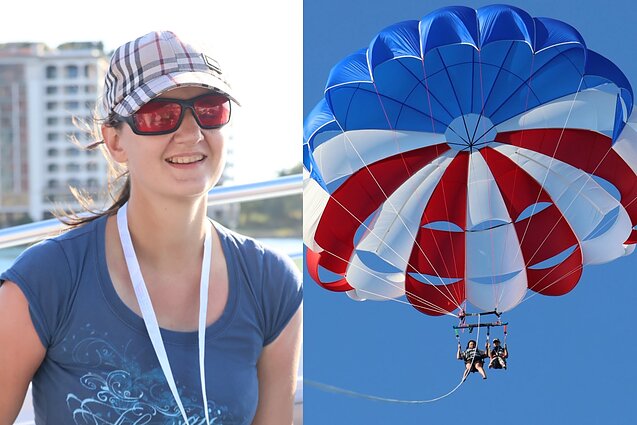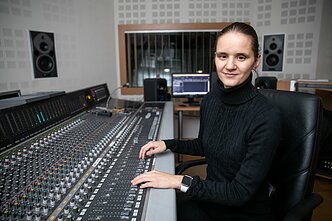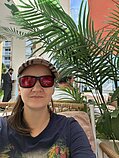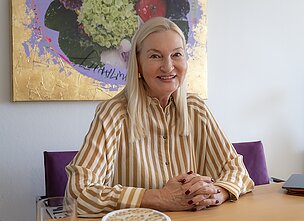






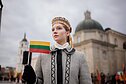





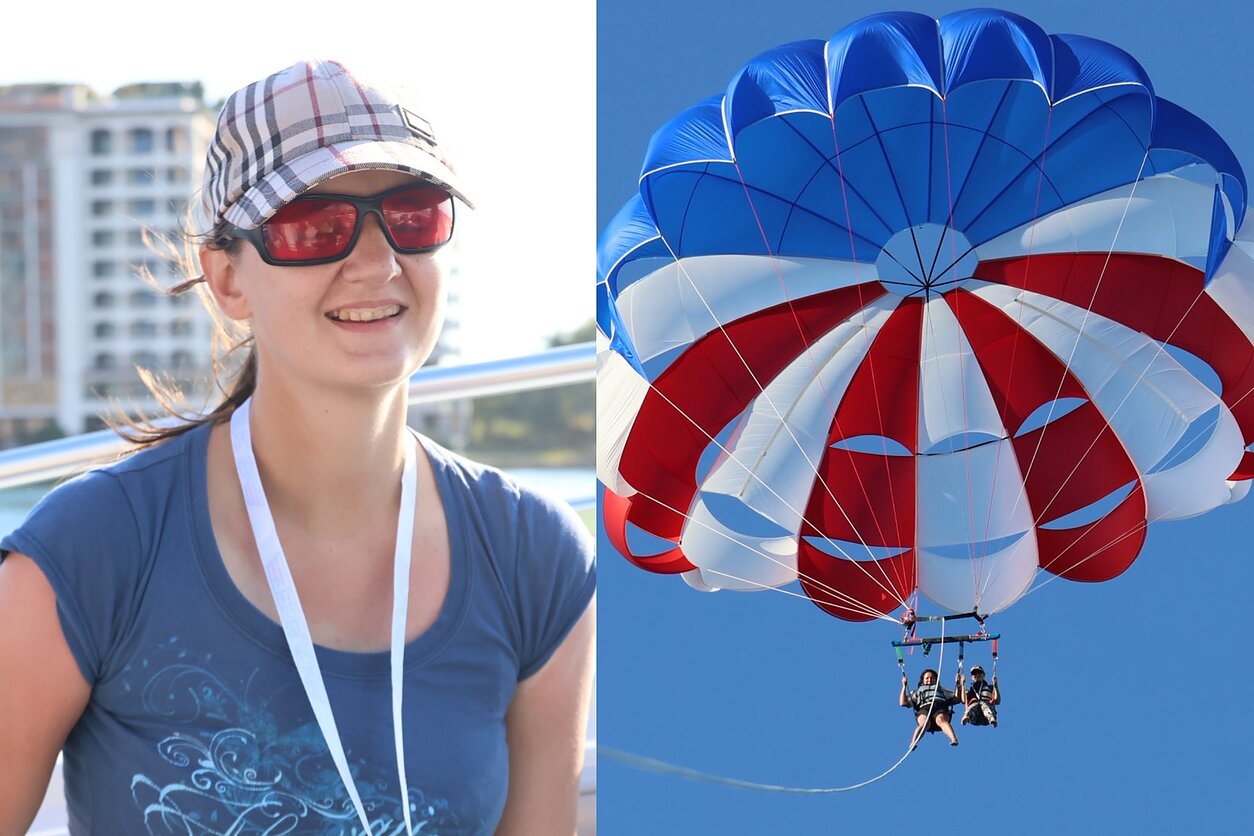
Sound engineer Eglė Jarmolavičiūtė, who has been blind since childhood, admits that she felt some anxiety before travelling alone across the Atlantic – but says the decision changed her life.
Swimming in the ocean, boating trips and parasailing became unforgettable experiences and sparked a new passion for travel. Speaking to LRT.lt, Eglė reveals she has already booked tickets to her next dream destination.
Do you travel often?
Not really. I used to think there was no point in travelling if you couldn’t see. I was even puzzled that other blind people travelled – I didn’t understand what they expected to experience. But last spring I travelled alone to Germany for a short work trip, then in the summer went to Dublin with a friend. That started to change my perspective.
I had wanted to visit the United States since childhood. Growing up, I’d heard it described as a dream country – where money rains from the sky, everyone has jobs and lives well. I wanted to see for myself whether that was true. The problem was that I had no one to travel with, and because I’m blind, I didn’t dare go alone.
What changed your mind?
I heard a woman’s story on the TV programme Life’s Lemons („Gyvenimo citrinos“) about hypnotherapy. At the time, I felt weighed down by unresolved childhood trauma and exhaustion, so I decided to try it myself. I worked a lot on myself, regained energy at work, started enjoying everyday life – and gained courage.
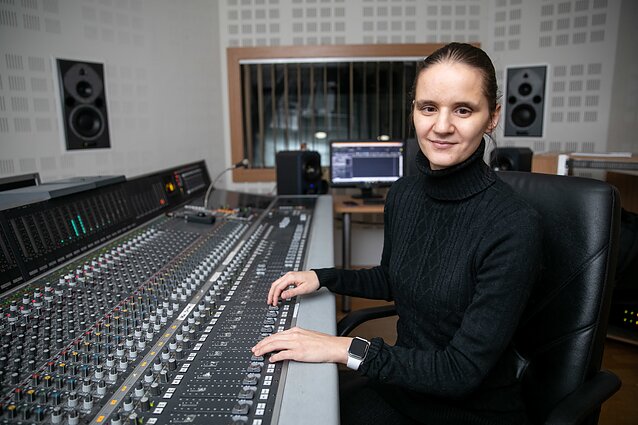
It felt like nothing was impossible anymore. I began doing things I’d never dared before – even replacing electrical sockets and water filters at home myself, with the help of ChatGPT. Friends warned me I’d break everything, but I thought: what’s the worst that could happen? If I break the wall I can just reconstruct it.
That’s when I decided to go to the US. I bought the tickets. As the trip approached, my feelings fluctuated – sometimes excitement, sometimes fear that I’d made a terrible mistake.
Did you spend a lot of time planning in advance?
I didn’t plan much in advance. I thought I’d mostly relax on the beach, but I’m too active for that. In three weeks, I experienced far more than expected.
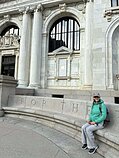
I spent a few days in Arlington, near Washington DC, and visited the capital. I fulfilled a long-held dream: visiting an Apple Store in the US – several, in fact, including the one housed in a historic library building from 1904, considered one of the most beautiful Apple stores in the world. A staff member, Jessica, guided me around and described everything.
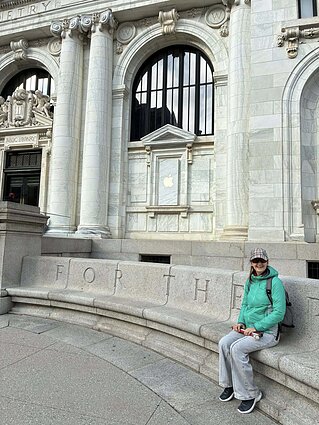
I was so excited to get there, I even tackled the metro – a challenge, since navigation apps don’t work underground. With help from strangers, I found the right line and made it.
Later, I spent two weeks in Miami Beach and Coconut Grove. I quickly realised I wouldn’t last long just lying on the beach, so I started planning activities – usually the same day or the day before, again with ChatGPT’s help.
The hardest part of travelling solo was that many activities are meant for pairs. I couldn’t take a helicopter or seaplane ride for that reason.
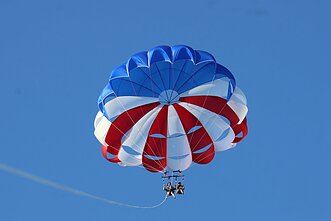
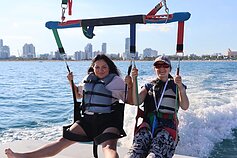
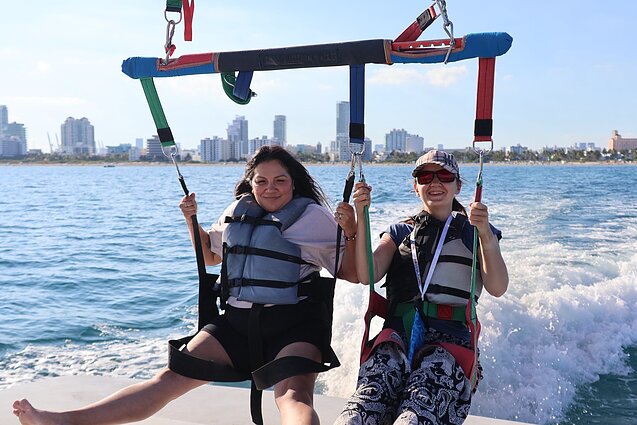
Parasailing, however, worked out. The agency found me a partner – a woman celebrating her wedding anniversary and her daughter’s birthday. Her daughter and husband were to fly together, and she had been hesitant to fly herself, but when offered the chance to go up with me, she agreed.
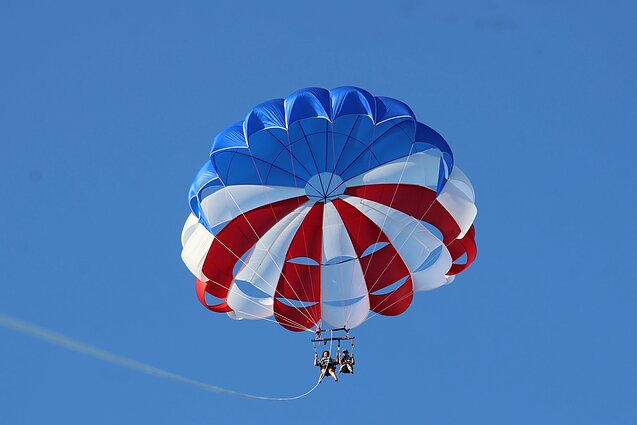
The experience was extraordinary. I couldn’t see how high I was, but the feeling – I was above the Atlantic Ocean! My partner later told me she had once suffered a stroke on a plane and nearly died. Since then, she tries never to miss opportunities.
She told me: “You should never miss the opportunity.” Those words stayed with me. I realised that many times I thought I didn’t want something, it was actually fear speaking. Now I live by the rule: “If not now, when?”
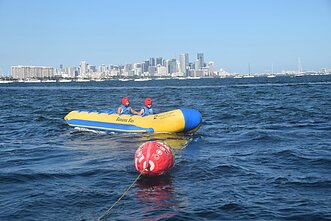
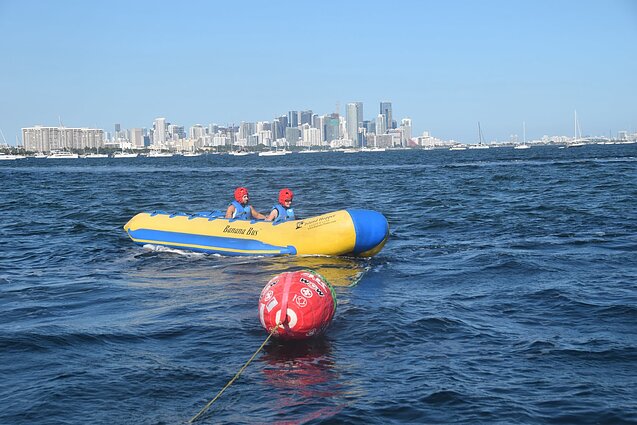
I went banana boating in Coconut Grove – again, an activity requiring two people. I asked the staff if someone would join me. One agreed. Flying over the waves was incredible – though I did taste how salty the ocean really is.
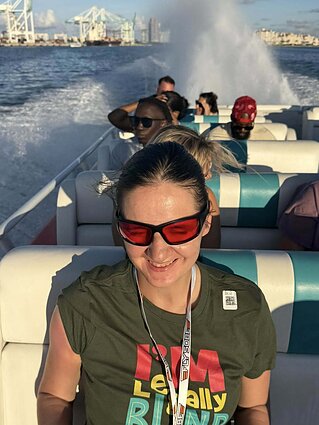
I also visited Everglades National Park on an airboat. It broke down in the middle of the swamp, and we had to wait for rescue. I rode speedboats, explored parks, and spent evenings on rooftop terraces drinking alcohol-free cocktails.
I proved to myself that travelling without sight can be deeply rewarding.
Even sighted people often share stories of getting lost, whether at the airport or while wandering the streets. What helped you to find your way?
At airports, people with disabilities can request assistance, as long as this is indicated when purchasing the ticket. In Vilnius, assistants accompany passengers through security checks and take them to the departure gate, and later to the aircraft itself. Cabin crew then meet them on board and provide safety instructions.
In the United States, even if you refuse a wheelchair, you are still seated and transported through the airport. It felt a little strange but I did not object – especially because I had been worrying that I might not understand what customs officers would say to me on arrival (I had heard they speak very quickly and unclearly), and that I might be denied entry to the country. In the end, everything went smoothly.
During the trip itself, several apps were crucial. ChatGPT helped me choose food and plan activities. I often took photos and asked it to describe what was in them.
Navigation was essential. I used WeWalk, an app designed for blind and partially sighted people, which provides step-by-step directions to a destination. US buses announce routes aloud, but you must press a “Stop” button to get off – which once took me a while to find because I was in an area with many immigrants who barely spoke English. Eventually, one person took my hand and placed it on a cable. He explained that this was the “Stop” button I had been looking for – only it was not really a button at all.
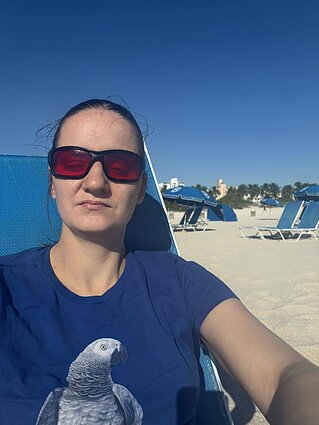
I also improvised and came up with various tricks. For example, I attached a smart tracker to my sunbed on the beach, which allowed me to locate it easily. After lunch, beaches are usually crowded and noisy, so after swimming the tracker was essential to help me find my sunbed again. That said, all GPS devices have a margin of error of several metres. For a sighted person this is not a problem, but for someone who is blind, even a few metres can be a challenge.
I also discovered Aira, a video-call service with trained assistants who can see through your phone camera and guide you in real time. They helped me find the entrance to the White House when maps failed.
Can you compare which environment is better adapted for people with visual impairments – the US or Lithuania?
It depends on which part of the country you are talking about. Vilnius is relatively convenient, although more Braille signage would be welcome. In the US, however, where junctions are often large and complex, I generally missed pedestrian traffic lights adapted for blind people. I counted only a couple, and in Coconut Grove – considered an affluent area – I did not encounter a single one.
In Vilnius, many traffic lights emit different sounds for red and green signals, making it easier to know when it is safe to cross. In my experience, US traffic lights always beep in the same way, meaning that when you approach one, you first have to press a button to find out which signal is on, which takes a lot of time. So, public transport accessibility in Europe is generally better.
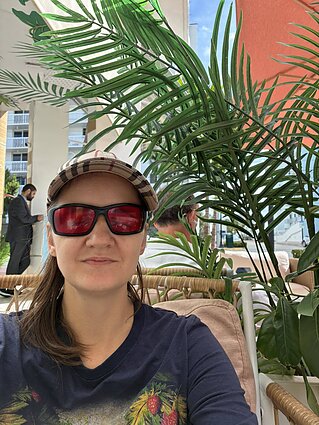
You mentioned that the US had been your dream country. Did that image collapse?
I liked the US – its ease and openness. I’d return, but I wouldn’t live there. I loved the huge choice in pet shops, we don't have that many options (I have parrots, a cat and a dog). But I was disappointed by the amount of plastic. Even restaurants often use disposable cutlery, and recycling is limited. Europe does much better.
Are you already planning another trip?
After experiencing, smelling and finding so much abroad, returning to a cold Lithuanian winter was hard. Sharing my journey on social media helped – revisiting memories made me realise I needed something new to look forward to.
So I’ve already booked my next trip. This summer I’ll go to Canada – Toronto and Vancouver – and briefly back to the US, to Seattle. I’m counting the days.
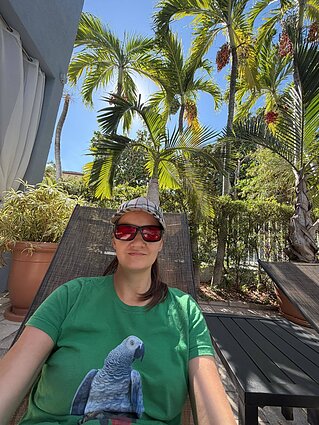
This time, I’ll plan more. I don’t enjoy traditional tours or museums, but I love experiences – safe adrenaline. I want to truly feel the country. I worked and saved for this, so my holidays are a celebration.
In the US, I allowed myself everything – all the sweets and junk food. I wanted to experience the country fully. I’ll do the same in Canada.

Newsletter
Every Friday morning.